Company Formation UAE: Mainland vs Free Zone vs Offshore


If you're setting up a company in the UAE, you're going to hit this question fast: mainland, free zone, or offshore? Which one's actually right for you?
It's not a small decision. Get it wrong and you could spend your first year stuck — unable to sell to the people you actually want as customers, or paying for a setup you didn't even need. Get it right, and this whole company formation thing turns out to be the easy part.
Here's the good part though: it usually comes down to three or four straight-up questions about how your business actually works. So let's go through it — what each option means, how they stack up against each other, and how you land on the right one without reading a 40-page legal document.
Quick Answer, If You're Just Skimming
| Structure | Best For | Starting Cost |
|---|---|---|
| Mainland | Selling directly to UAE customers, government contracts | AED 10,000–15,000 |
| Free Zone | International or export-focused businesses, consultants | AED 6,000–8,000 |
| Offshore | Holding companies, investment structures, asset protection | AED 8,000–12,000 |
Still not sure which one's yours? Keep going, we'll get into it.
What's a Mainland Company, Really?
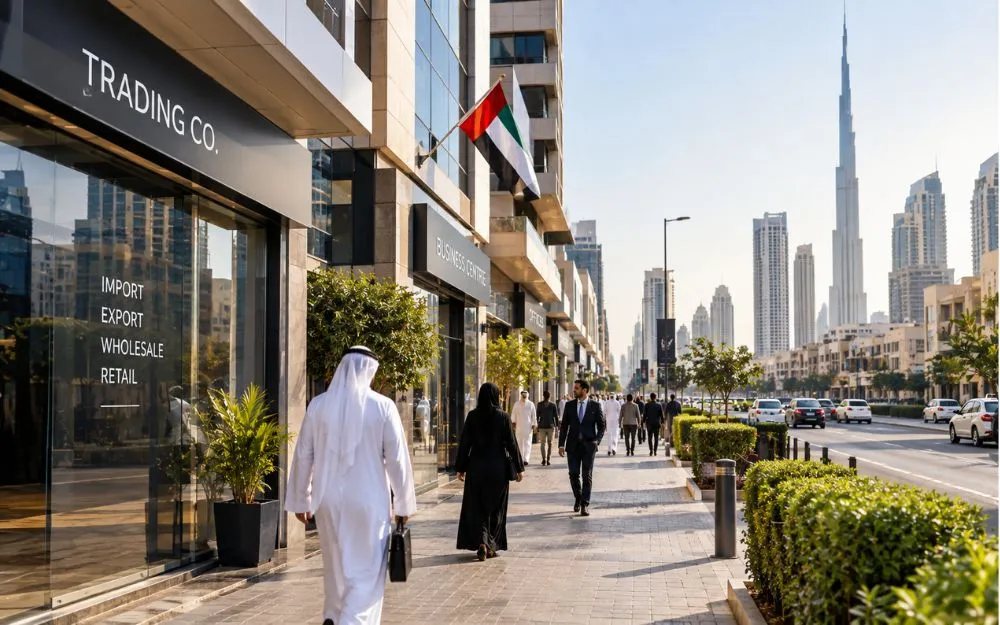
A mainland company is one you register straight with the government — DET if you're in Dubai, ADDED in Abu Dhabi, SEDD in Sharjah. There's no "zone" you belong to. You're free to work anywhere in the emirate, and really, anywhere in the country.
Since 2021, foreigners can own 100% of most mainland businesses. You don't need a local Emirati partner anymore for most activities — that's a big deal, honestly, because five years ago that wasn't the case. It's why mainland is a real option for way more people now than it used to be.
Here's what you actually get with mainland:
- You can trade anywhere across all seven emirates — no middleman needed
- You can bid on government contracts — free zone and offshore companies generally can't
- People trust it more — a lot of UAE clients prefer working with a mainland-licensed company
- You need an Ejari-registered address, but that can just be a flexi-desk or shared workspace, not a full office
Go mainland if: your customers are in the UAE, you want to work with the government, or you just want to trade anywhere without limits.
What's a Free Zone Company?
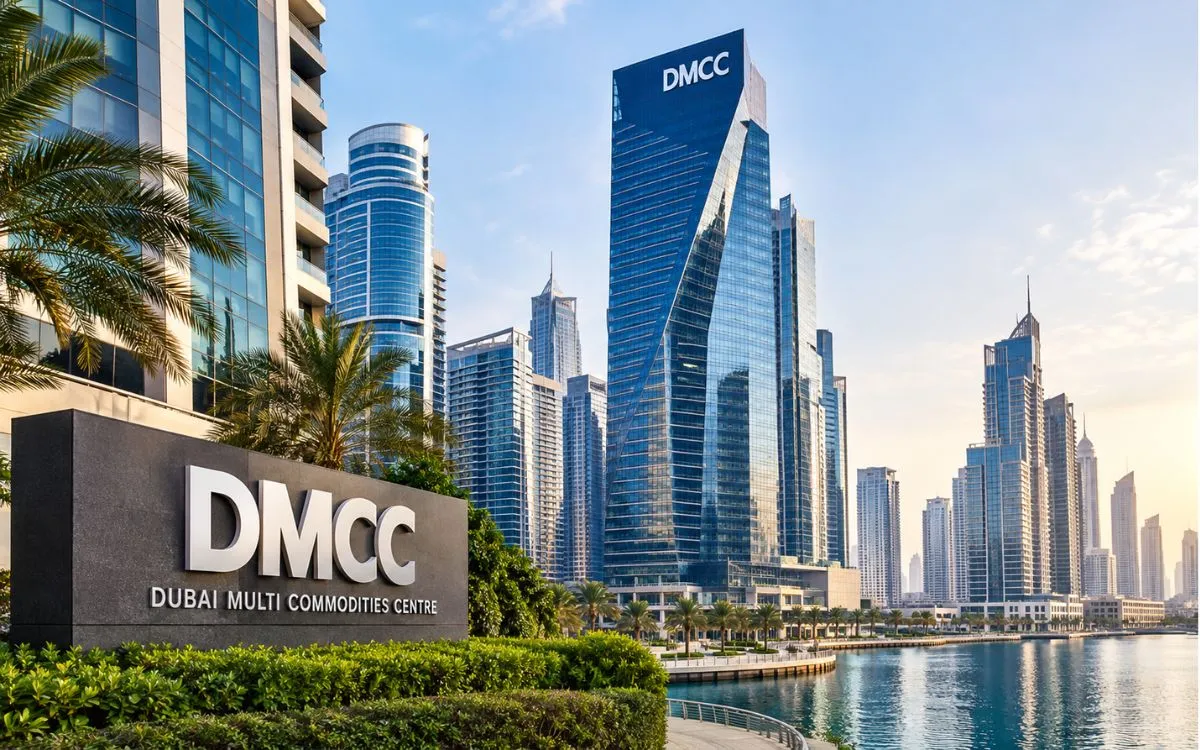
A free zone company registers with a specific zone authority instead of the government directly. You've probably heard of a few — DMCC, IFZA, JAFZA, SHAMS, DAFZA, RAKEZ, Ajman Free Zone, Dubai South. There are over 40 of these across the UAE, and each one leans toward a different kind of business.
Free zones want your money, basically — so the deal is good: 100% foreign ownership as standard, setup in 2 to 5 working days, and usually cheaper than mainland.
But there's a catch, and it's an important one: a free zone company usually can't sell directly to customers on the UAE mainland — you'd need a mainland distributor for that. If your business depends on local UAE customers, that's a real problem. If it doesn't, honestly, it barely matters.
A quick idea of what each zone's known for:
- DMCC — commodities trading, professional services
- JAFZA — logistics, manufacturing, import/export
- IFZA and SHAMS — cheaper options, popular for trading and media companies
- RAKEZ — budget-friendly, wide range of activities, based in Ras Al Khaimah
Go free zone if: most of your customers are outside the UAE, you're a consultant working with international clients, or you just want the fastest, cheapest way in.
What About Offshore?
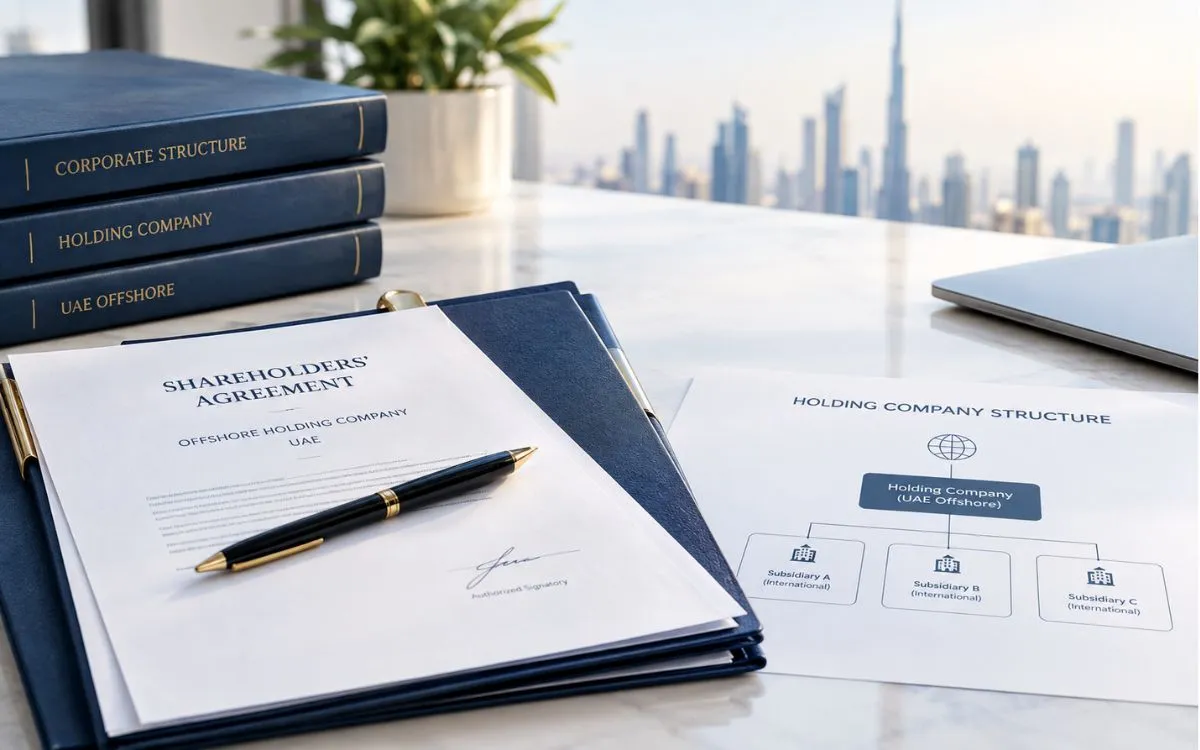
Offshore's a different animal — it's not really for running a day-to-day business. Companies like JAFZA Offshore and RAKEZ Offshore exist for holding assets, structuring investments, that kind of thing.
You can't rent office space with an offshore company, can't sponsor visas, and can't do business inside the UAE. What you do get is strong asset protection, real privacy, and 0% tax on income from outside the UAE — which is why people use it to hold real estate, investments, or other companies, rather than actually run a business through it.
Go offshore if: you're structuring investments or holding assets, not running a business people interact with.
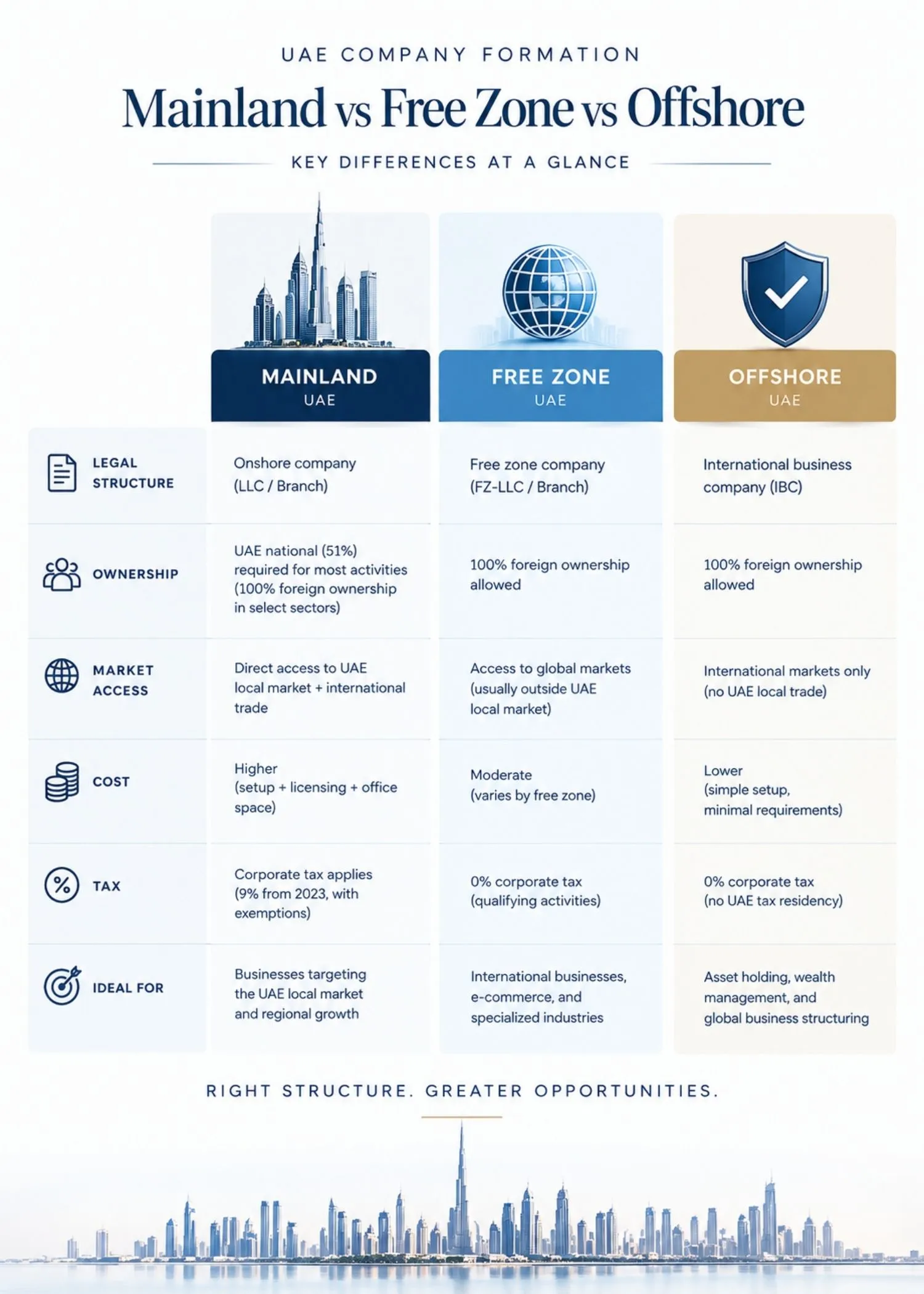
Mainland vs Free Zone vs Offshore, Side by Side
| Mainland | Free Zone | Offshore | |
|---|---|---|---|
| Foreign ownership | 100% (most activities) | 100% (standard) | 100% |
| UAE market access | Full, no restrictions | Limited — needs a distributor | None |
| Setup cost | AED 10,000–15,000 | AED 6,000–8,000 | AED 8,000–12,000 |
| Setup time | 5–10 working days | 2–7 working days | Varies |
| Office requirement | Ejari address required | Flexi-desk is fine | No office needed |
| Visa sponsorship | Yes | Yes | No |
| Government tenders | Yes | No | No |
| Best for | Local trade, government work | International/export | Holding & investment |
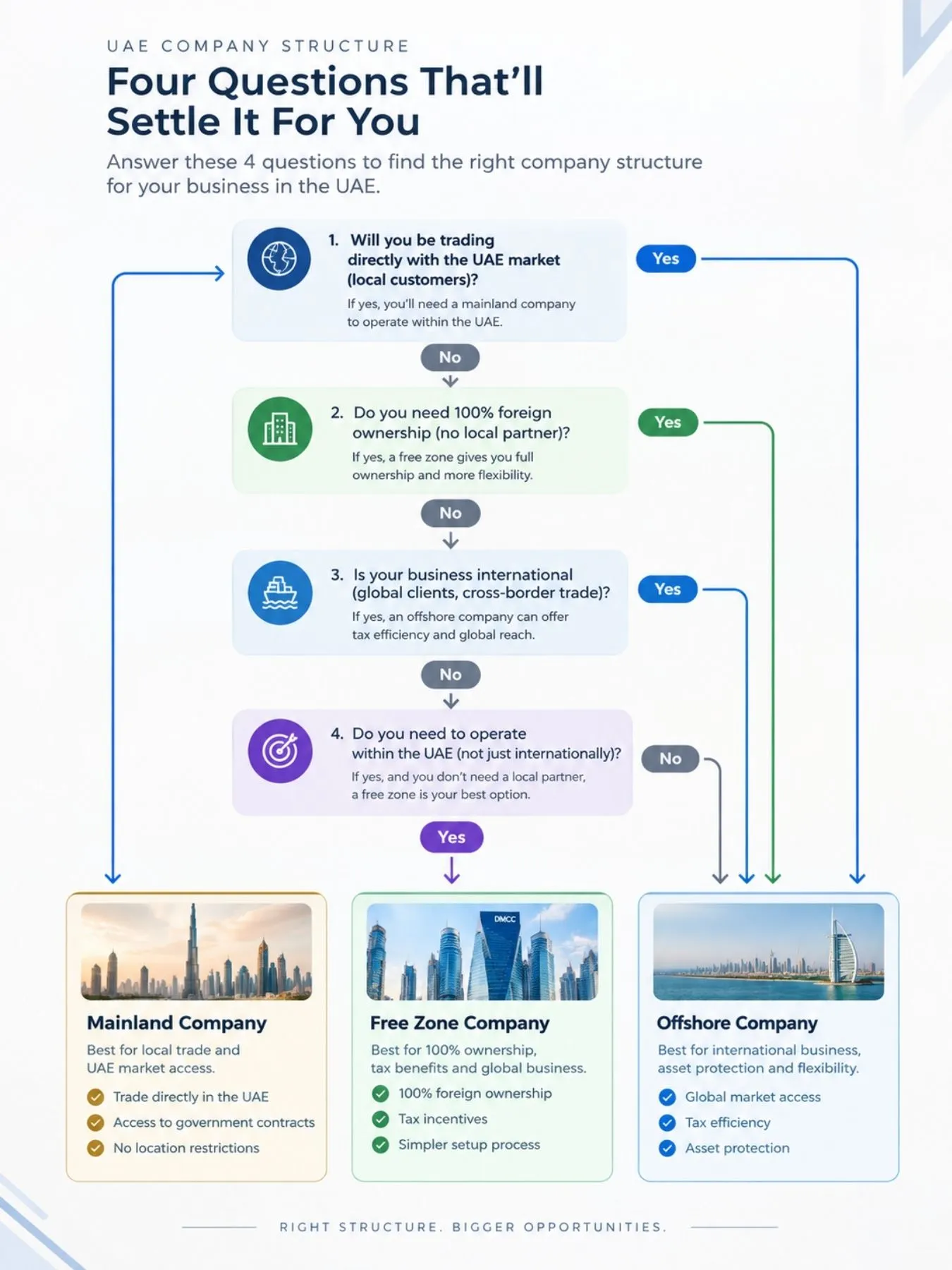
Four Questions That'll Settle It For You
If you're still stuck between two, ask yourself these:
- Where are your customers — inside the UAE, or outside? UAE customers, go mainland. International clients, free zone makes more sense.
- Will you ever need to bid on government contracts? Only mainland can do that. If there's even a chance you'll want this later, think about it now.
- Do you need to sponsor visas — for yourself or your team? Both mainland and free zone let you do this. Offshore doesn't — so if you're planning to actually live and work here, offshore's out.
- Is this a real, operating business — or just a place to hold assets? If you're running a business, it's mainland or free zone. If you're just holding stuff, that's what offshore is for.
Be honest with yourself on these four, and you'll already know your answer.
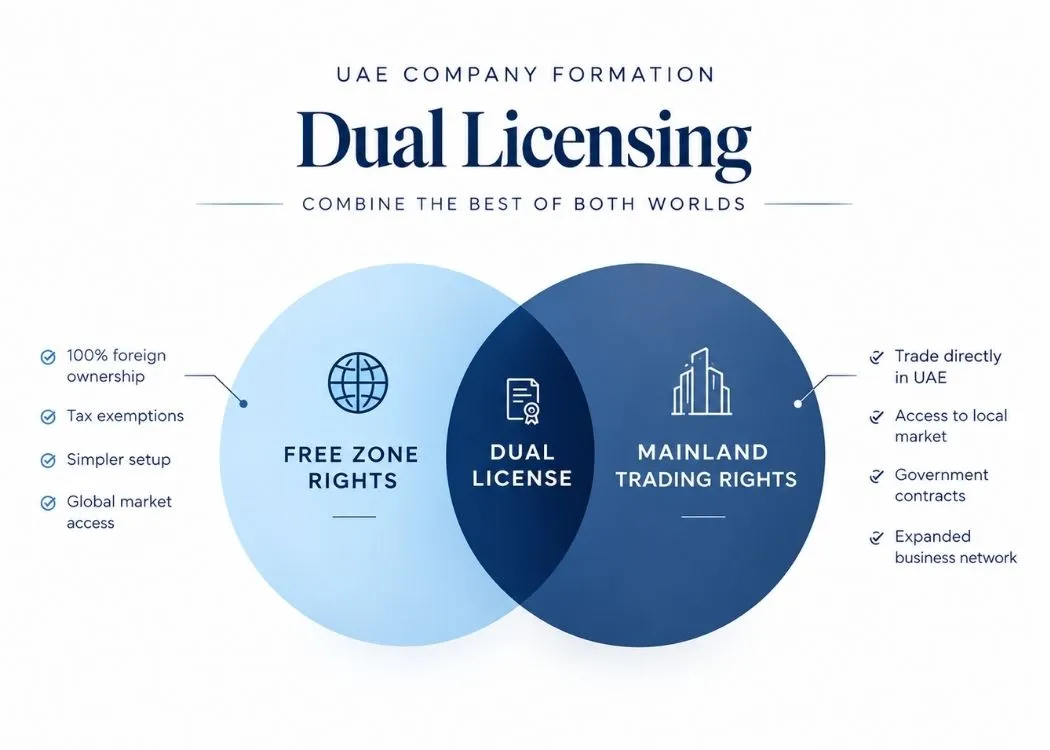
Can You Mix and Match? Dual Licensing
Quick thing worth knowing before you commit to anything: it's not always "free zone OR mainland, pick one" anymore. A growing number of free zones now let you get mainland trading rights too, without setting up a whole second company.
What this means in practice — if you're export-focused, you keep your free zone setup and its lower costs, but you can also sell to UAE mainland customers when that opportunity shows up, instead of always needing a distributor. It's fairly new, and not every free zone offers it yet, so ask your consultant directly if this flexibility matters to you.
Mistakes People Keep Making
These are the same four things that trip founders up, over and over, and usually end up needing a costly fix within the first year:
- Picking free zone just because it's cheaper, without checking if their actual customers are in the UAE — then having to switch to mainland six months later
- Not checking the visa quota before picking a free zone package, then realising they can't sponsor enough staff
- Assuming all free zones are basically the same — they're not. Cost, allowed activities, and visa limits are different for each one
- Forgetting about the mainland office requirement until the last minute, which delays getting the license
Honestly, a 15-minute conversation before you file anything is almost always cheaper than fixing a mismatch later.
The Basics, Quickly
What does company formation in the UAE actually mean?
It just means legally registering your business — mainland, free zone, or offshore — with the right authority, so you can trade, invoice people, sponsor visas, and open a company bank account.
Who can actually do this?
Pretty much anyone. UAE residents, people living abroad, even existing companies wanting a UAE branch. Since 2021, foreigners can own 100% of most mainland businesses, and free zones have always allowed that.
When's the right time to start?
As soon as you know what your business does and who your customers are. There's no waiting period — a lot of people finish the whole process in about a week. The wrong time to start is before you've picked your structure, since that decision affects everything after it.
Where do you actually register?
Mainland — DET (Dubai), ADDED (Abu Dhabi), or SEDD (Sharjah). Free zone — pick from 40+ zones like DMCC, IFZA, JAFZA, SHAMS, DAFZA, RAKEZ, Ajman Free Zone, Dubai South. Offshore — JAFZA Offshore or RAKEZ Offshore.
Why do people pick the UAE at all?
No personal income tax, full foreign ownership for most businesses, a process that actually makes sense, and easy access to both the Gulf region and international trade.
How does it actually work, step by step?
Pick your structure and jurisdiction, reserve your trade name, submit your application with the right documents, get approved, then sort out your office, visas, and bank account. Usually takes 2–10 working days depending on where you're registering — check the table above for the specifics.

Still Not Sure? Let's Just Talk It Through
Every business is a bit different, and honestly, the right structure often comes down to details that don't fit neatly into a blog post — what you actually do, where you're headed, who your customers are.
If you'd rather just talk it out, book a free 15-minute call and we'll walk you through what fits your business, no pressure to commit to anything. Or check out exactly what's included in our company formation service — fixed pricing, one dedicated consultant, and your trade license in 5–10 working days.
Frequently asked questions about UAE company structures
Yes, though you're really setting up a new mainland company rather than converting the old one — so you're looking at the same cost and time as starting fresh.
Free zone, usually — around AED 6,000–8,000 versus AED 10,000–15,000 for mainland. That said, if your business needs UAE market access, the cost difference is worth paying upfront rather than restructuring later.
Not for most businesses anymore. Since 2021, most mainland activities allow full foreign ownership. A few specific, sensitive activities still need a local service agent — worth checking early if yours might be one of them.
No. Offshore companies can't lease office space or actually operate inside the UAE — they're strictly for holding assets and international trading.
Offshore, almost always. It's built exactly for that — holding assets, real estate, investments, with real privacy and 0% tax on income earned outside the UAE.
Ready to set up your UAE company?
Modest Consulting Services FZE handles the complete setup — from choosing the right structure to getting your trade license, visas, and bank account sorted. Fixed pricing, one dedicated consultant, done in 5–10 working days.
modest-uae.ae
Mohmed Sahal
Client Relation Executive — Modest Consulting Services FZE
Mohmed specialises in guiding founders and investors through UAE company formation, helping them choose the right structure and jurisdiction from day one.